 Get Quote
How Metal Homeware Is Made: Wire Forming, Welding and Inspection
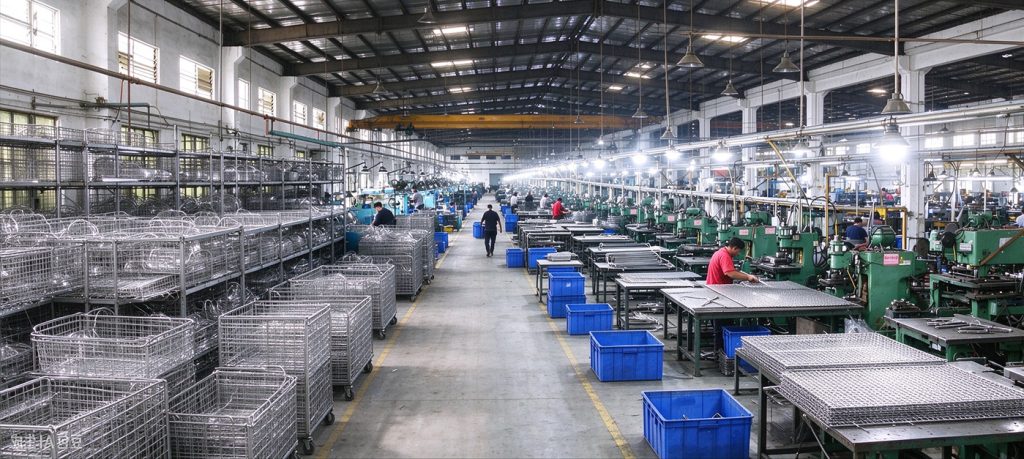
A finished wire rack can hide small process differences that affect fit, stability and appearance. Buyers do not need to manage the production line, but they do need an agreed sample and a clear list of critical checks. The useful question at each stage is: what must remain consistent with the approved specification?
Wire forming sets the geometry
The process normally begins with material preparation and wire forming. The wire must be shaped accurately so that the product’s base, sides, hooks and dividers align during assembly. Small variation at this stage can become more visible after welding, especially on a product with repeated lines or a large open frame.
Welding joins structure and appearance
Welding joins the formed sections and gives the product its strength. The placement and consistency of welds affect both performance and appearance. A good production review looks beyond whether a weld simply exists. It considers whether the joint is clean, whether the structure sits flat and whether the finished item feels balanced when loaded or installed.
Finishing depends on preparation and handling
After assembly, the product moves through its chosen surface-finishing process. This stage changes the visible character of the item and helps prepare it for its intended use environment. Parts need to be handled carefully between stages because scratches or contamination can undermine an otherwise well-made product.
Inspection should follow the product’s real use
Quality control is most effective when it is built into the process, not left to a final check alone. Dimensional checks, visual inspection, assembly verification and packaging checks each answer a different question. The final inspection should confirm that the product matches the approved sample and that the packaging contains the correct components and markings.
Connect each production stage to a review question
| Stage | Buyer review question | Reference to agree |
|---|---|---|
| Forming | Do the base, sides and hooks align with the intended use? | Drawing revision and critical dimensions. |
| Welding and assembly | Does the unit sit correctly and are joints and edges acceptable? | Approved assembly and visible-quality criteria. |
| Finishing | Are colour, sheen and coverage consistent with the sample? | Finish reference and any agreed evaluation method. |
| Packing | Are the correct parts, protection and labels included? | Approved component list and pack-out record. |
Separate an observation from an acceptance decision
A photograph can identify a visible concern, but it does not establish a load capacity, coating specification or dimensional tolerance. When a sample issue is found, describe where it occurs, which requirement it affects and how the correction will be checked. Keep the revised sample or agreed reference identifiable so that an older version does not return to production.
- Select the dimensions and functions that matter most to the intended use.
- Agree how visible welds, edges and surface appearance will be assessed.
- Confirm that accessories and installation hardware match the assembly.
- Review changes to material, finish or packing before accepting a substitution.
See our factory capabilities for the company’s manufacturing scope. The bathroom finish guide and pack-out checklist expand on two stages that often need separate approval.
Define the critical checks for your item
For a product review, send a drawing or reference item and identify the dimensions, functions and appearance requirements that must be controlled through our OEM / ODM enquiry form. Acceptance criteria should be agreed for the actual order.